

How to Find the G-Spot: A Step-by-Step Guide to Pleasure
ErnaLearning how to find the G-spot is less about precision and more about understanding how your body responds when it’s relaxed, aroused, and curious.
However, if you’ve ever gone searching and returned empty-handed, you’re not alone. Many women hear about the G-spot, try to find it, and end up thinking, “Is it just me?”
Nope. The frustration is real and totally normal.
The G-spot isn’t a tiny hidden button waiting to be discovered on cue. It’s more like an experience that unfolds with the right touch, pressure, and mindset.
Let us help you find and stimulate your most sensitive erogenous zone with this easy-to-digest guide.
What the G-Spot Is (and What It Isn’t)
The G-spot or Gräfenberg spot isn’t a separate organ or a mysterious hidden switch. It’s a highly sensitive erogenous area inside the vagina, made up of shared nerve endings that respond strongly to pressure and arousal.
Here’s the part most people don’t explain well: the G-spot is closely connected to the internal part of the clitoris and clitoral network.
While the clitoral glans (the part you can see and touch) sits on the outside, the clitoris extends inward. Its “legs” (called crura) and bulbs wrap around the vaginal canal and urethra.
The G-spot is the area where you can stimulate internal clitoral structures through the vaginal wall.
So, it’s not a standalone magic button. It’s part of a larger pleasure system (often called the clitourethrovaginal complex) that works together with the urethral sponge.
The term G-spot is attributed to Ernst Gräfenberg, who first described this area’s sensitivity.
Where Is the G-Spot Located?
The G-spot is located on the front wall of the vagina, the side closest to your belly button and pubic bone (not the back wall near your spine). This detail clears up a lot of “why am I not finding anything?” moments.
For most women, it sits about 2 to 3 inches inside the vaginal opening, just past the pelvic bone.
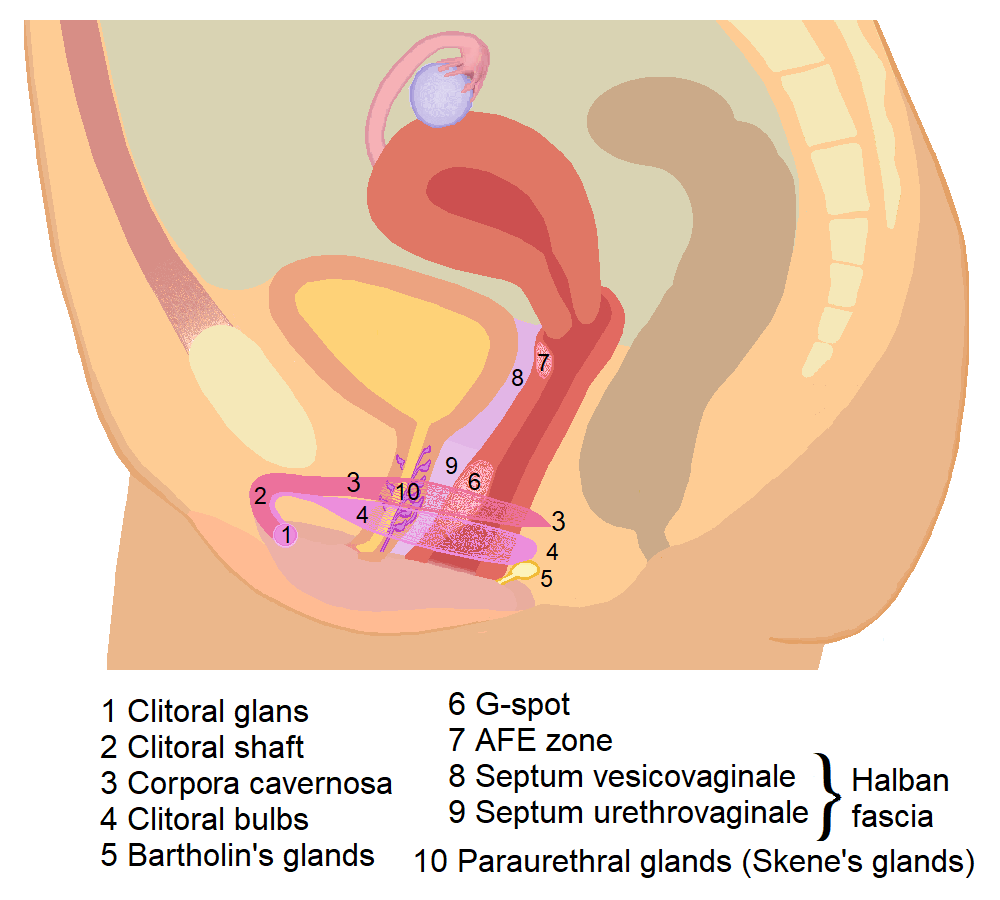
That means you don’t need to go deep to reach it. In fact, going too far often skips right over the area you’re trying to explore.
That said, bodies aren’t copy-paste.
For some women, this sensitive zone is closer to the entrance; for others, it’s slightly deeper or spread over a wider area.
Think of the G-spot less as a pinpoint location and more as a zone of sensitivity that varies from body to body.
How to Make G-Spot Exploration Easier
Let’s talk about the real game-changer, even before technique enters the picture: sexual arousal.
When you’re turned on, the G-spot area becomes more engorged, slightly swollen, and far more responsive to touch. That’s what makes it easier to locate and more pleasurable once you do.
Without arousal, it can feel flat, muted, or completely unremarkable.
Mental readiness matters as much. Go in relaxed, curious, and pressure-free.
You’re exploring sexual pleasure, not testing yourself.
Physically, a few small things help a lot:
- Emptying your bladder can reduce that “is this pee?” confusion.
- Clean hands and trimmed nails keep things comfortable.
- Lube is essential; dryness makes everything difficult to feel and enjoy.
Set the scene too. Ensure privacy, enough time, and a cozy environment where you won’t feel rushed.
Need a refresher on proper warm-up? This pairs perfectly with our Foreplay Guide. Because pleasure loves a slow build.
How to Find G-Spot with Your Fingers
Fingers give you direct feedback and let you feel what’s happening inside your body. The key here is choosing positions that angle your fingers toward the front vaginal wall, where the G-spot lives.
Step 1: Position Your Body
Different positions influence how easily your fingers reach and apply pressure. Try these and notice what feels most natural:
- The G-Spot Tilt (On Your Back with Elevation): Lie on your back, bend your knees, and place one or two pillows under your hips or butt. This tilts your pelvis upward and brings the front vaginal wall closer to your fingers, making upward pressure easier and effective.
- Belly Down (Prone): Lie on your stomach, optionally with a pillow under your hips. This position lets you use gentle body weight to create the firm, steady pressure needed for G-spot stimulation.
- Squat and Rock: Drop into a deep squat. This naturally opens the pelvic floor, letting you rock your hips to control pressure and angle precisely.
- Kneeling (All Fours): Get down on your hands and knees, upright or leaning forward. This position naturally angles the vagina, so upward strokes land right where you want them.
- Side Spooning: Lie on your side and bend your knees. It’s a comfy position for using curved fingers (or toys later on).
- Chairgrasp (Opening Up): Sit on the edge of a chair or bed, legs spread wide or wrapped around the sides. Upright positioning gives easy access and great control.
Step 2: What You’re Searching For
Put one or two fingers inside and curl them into a come-hither shape, with your fingertips facing upward toward the front vaginal wall.
This motion isn’t about poking or thrusting; it’s about slow, curious exploration.
What you’re feeling for is a change, not a clearly marked spot.
The G-spot area often feels slightly spongier, ridged, or more textured than the surrounding smooth vaginal walls, especially when you’re aroused.
Sensation-wise, you might notice pressure, warmth, fullness, or heightened sensitivity rather than instant pleasure.
And sometimes the clearest signal is an emotional one: “Oh… this feels different.”
You may experience a few common challenges, so here are the solutions:
- “I can’t feel anything:” Slow down, build more arousal, and add more lube.
- “It just feels like pressure:” That’s often the beginning; stay with it!
- “It’s uncomfortable:” Stop using too much force or adjust your angle.
There’s no rush. Let your body guide you.
Step 3: G-Spot Stimulation Techniques
Start with the classic come-hither motion and build from there when you’ve found an area that feels responsive.
To prevent hand fatigue, lock your wrist and use your forearm to move, rather than just wiggling your fingers.
Pro tip: When you find a technique that feels good, stick with it. Remember that consistent rhythm builds arousal better than constant switching.
Pleasure doesn’t always have to lead to a specific outcome like female ejaculation. G-spot play can feel amazing without vaginal orgasm, squirting, or anything dramatic.
Pressure Play
The G-spot usually prefers firmer pressure than the clitoris. Start gently, then slowly increase as arousal builds. You can also press down on your pubic mound with your free hand to intensify internal pressure.
Circular & Side-to-Side Motions
Curling isn’t the only option. Try small circles or side-to-side strokes across the spongy area. Many women get more sexual satisfaction from these movements.
Tapping or Drumming
Instead of rubbing, try light, rhythmic tapping to create a totally different (and surprisingly powerful) sensation.
The “Push-Out
Gently bearing down with your pelvic muscles can push the G-spot closer to your fingers, increasing contact and intensity.
Dual Stimulation (Blended Pleasure)
Adding clitoral stimulation while stimulating internally often deepens pleasure and helps connect everything, a.k.a multiple orgasms.
How to Stimulate the G-Spot with Toys
Sex toys can totally transform G-spot play and your sex life. They work great when fingers get tired, can’t achieve the correct angle, or nudge you toward orgasm.
The biggest advantage? Design!
G-spot toys naturally reach the front vaginal wall and apply steady pressure or vibration without strain. So, you worry less about “how to find my G-spot” and find it easier to indulge in yourself.
Look for a pronounced curve or slightly bulbous head when you buy a toy. This helps it nestle into that sensitive area instead of sliding past it.
Additionally, opt for body-safe, non-porous materials (such as medical-grade silicone) for comfort and hygiene.
Popular G-spot-friendly types include:
- G-spot vibrators for targeted pressure and vibration patterns
- Curved dildos for firm, controlled stimulation
- Dual-action or rabbit vibrators for blended internal and clitoral pleasure
- Ben Wa (Kegel) balls for subtle internal pressure and awareness
Pro tip: Thrust the toy less and try more rocking, tilting, or holding it in place against the front wall. Let the toy do the work, while you listen to your body and enjoy the ride.
Best Sex Positions to Hit the G-Spot
Angle matters more than speed or depth when it comes to G-spot stimulation during penetrative sex. Positions that naturally press against the front vaginal wall tend to feel more intentional and pleasurable.
Just as important? Communication.
Your partner can’t feel what you’re feeling, so gentle guidance makes all the difference.
G-spot–friendly sex positions to try:
- Woman on top (leaning back): Leaning back shifts penetration upward, letting you control angle, depth, and pressure exactly where it feels best.
- Missionary with hips elevated: A pillow under the hips tilts the pelvis, making front-wall contact easier and more consistent.
- Doggy style with chest lowered: Lowering the chest (instead of arching the back) changes the angle, so thrusts press forward rather than straight in.
These positions work because they combine pelvic tilt with front-wall pressure. If your partner isn’t sure they’re hitting the right area, use simple verbal cues like “a little higher,” “stay right there,” or “that angle feels perfect.”
Pro tip: For more inspiration, check out our Best G-Spot Sex Positions guide and make exploration feel effortless.
How to Find Your Own G-Spot
Finding and stimulating your G-spot is about understanding your body, slowing down, and exploring what feels good. The experience becomes more pleasurable when you focus on arousal first, use the right angles, and pay attention to texture and sensation.
Fingers help you learn, positions help you connect, and toys can make everything easier and more consistent.
Our G-spot vibrators are thoughtfully designed with curves, pressure, and comfort in mind, so hitting the right spot feels natural, not frustrating.
If you’re ready to explore further, the right tools really matter.


